
KEYNOTES
Ideas That Shift the Room.
Stories That Stay With Them.
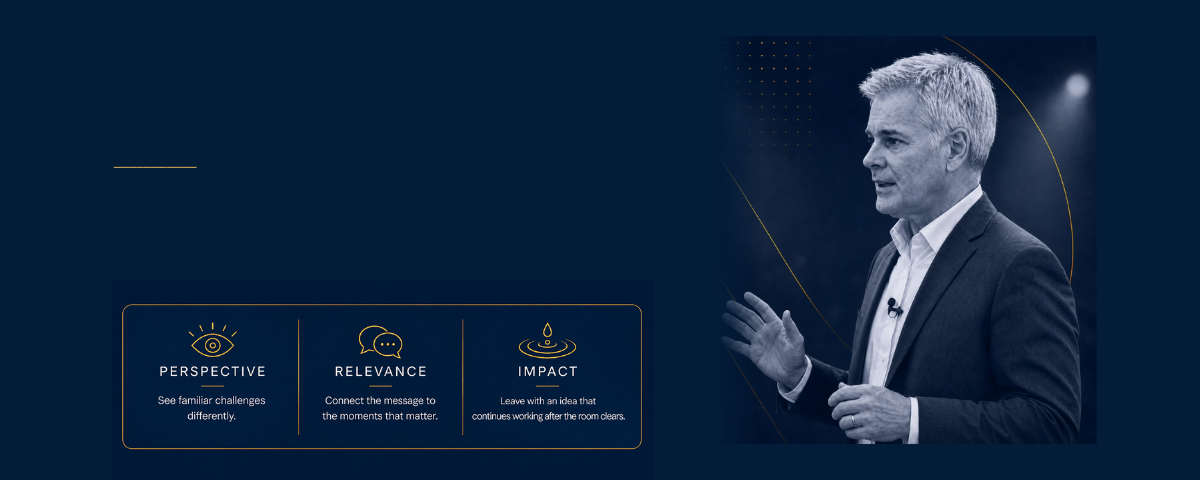
A keynote should do more than hold attention.
It should give people a new way to see the challenge in front of them, and
something they can use when the pressure rises.
Bring the right conversation to your audience.
Keynotes can stand alone or expand into workshops, leadership intensives, and advisory engagements.
THREE KEYNOTES. THREE DIFFERENT PRESSURE POINTS.
Each keynote focuses on a different way strong communicators can lose clarity, authority, or direction when the stakes rise.
The Pressure Heist
How Experts Have Their Authority Stolen in Broad Daylight
The strongest recommendation in the room can still lose when the communication loses control.
Managers see it happen in important meetings. A capable professional knows the material, has done the work, and should be credible. Yet somewhere between the opening and the final answer, the authority begins to drain from the message.
The expert feels it but may not know why. The listeners sense it but cannot quite put their finger on it.
Under pressure, smart professionals begin explaining too much, defending too quickly, softening strong recommendations, or abandoning the structure that made their thinking persuasive. Their expertise has not disappeared. But the way they communicate is quietly working against it.
In this highly interactive keynote, Paul Geiger introduces the six Pressure Heist culprits and reveals how they steal authority during investor updates, board discussions, client presentations, and high stakes strategic conversations.
Attendees learn how to recognize the subtle habits that weaken credibility, regain control before the room slips away, and make their expertise easier to trust.

Recommended Audience:
Private Equity, Investor Relations, Wealth Management, Asset Management, Executive Leadership, Financial Services Teams
This keynote is highly interactive and expandable into workshops, leadership off sites, and communication advisory engagements.
The Control Compass
How Leaders Lose the Room and Find Their Way Back
The meeting is going well until someone interrupts, challenges the premise, or asks the question no one expected.
Then the energy changes.
The speaker begins answering too quickly. The explanation becomes longer. The conversation drifts. Everyone is still listening, but the room is no longer following.
The expert feels it but may not know why. The listeners sense it but cannot quite put their finger on it.
Managers often recognize this pattern before the speaker does. They can see that a strong employee is losing influence, yet the problem is difficult to diagnose. It is not a lack of intelligence, preparation, or effort. It is a loss of direction under pressure.
The speaker feels the room slipping but does not know how to recover without sounding defensive, repetitive, or controlling.
Paul demonstrates how high performing professionals use structure, pacing, message discipline, and deliberate recovery to reorient a conversation when it no longer follows the plan.
Attendees learn how to recognize the moment control begins to slip, find their direction again, and continue leading the room through interruptions, pushback, and difficult questions.
Recommended Audience:
Investment Teams, Managing Directors, Client Facing Executives, Emerging Leaders, Boardroom Presenters
This keynote can be expanded into executive workshops, leadership intensives, and communication advisory programs.

The Numbers Avalanche
How Financial Experts Bury Their Best Thinking
The analysis is strong. The numbers are accurate. The recommendation should be persuasive.
But the room is still not convinced.
Financial professionals are trained to support their thinking with evidence. Under pressure, that instinct can become an avalanche of data, qualifications, context, and explanation. The more uncertain the room appears, the more detail the speaker adds.
Soon, the strongest insight is buried beneath the information meant to support it.
The expert leaves frustrated because the audience did not seem to understand. The audience leaves overwhelmed because it never became clear what mattered most. The manager sees a highly capable professional who needs to become more concise, persuasive, and senior in the room, but “be more executive” is not a useful instruction.
Paul reveals why financial experts explain too early, overload the audience, and allow detail to take control of the narrative.
Attendees learn a practical framework for leading with direction, organizing supporting evidence, and keeping the central recommendation visible during investor presentations, performance updates, strategic discussions, and difficult questions.

Recommended Audience:
Private Equity Firms, Investor Relations Teams, Capital Markets Professionals, CFOs, Portfolio Company Leadership, Financial Advisors
This keynote is adaptable for conferences, annual meetings, investor facing events, and internal leadership development programs.
NOT A LECTURE ABOUT COMMUNICATION. A ROOM THAT PRACTICES IT.
Live demonstrations
Audience participation
Practical frameworks people can use immediately